Async\Pool Architecture
This article describes the internal design of the universal resource pool. If you are looking for a usage guide, see Async\Pool. For the PDO-specific layer, see PDO Pool Architecture.
Data Structure
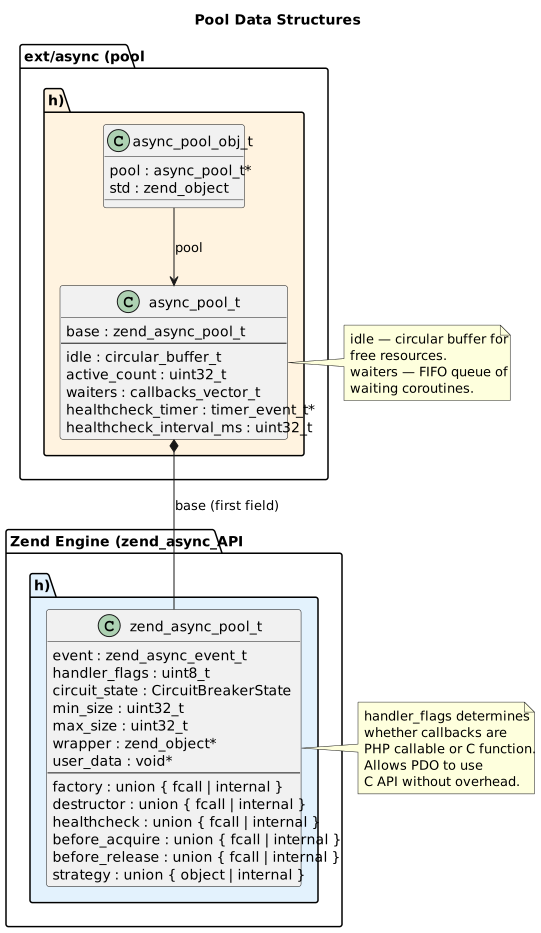
The pool is implemented in two layers: a public ABI structure in the PHP core and an extended internal structure in the async extension.
Two Creation Paths
A pool can be created from PHP code (via the Async\Pool constructor) or from a C extension (via the internal API).
| Path | Function | Callbacks | Used by |
|---|---|---|---|
| PHP | zend_async_pool_create() | zend_fcall_t* (PHP callable) | User code |
| C API | zend_async_pool_create_internal() | function pointers | PDO, other extensions |
The difference is in handler_flags. When the flag is set, the pool calls the C function directly, bypassing the overhead of calling a PHP callable through zend_call_function().
Acquire: Obtaining a Resource
Waiting for a Resource
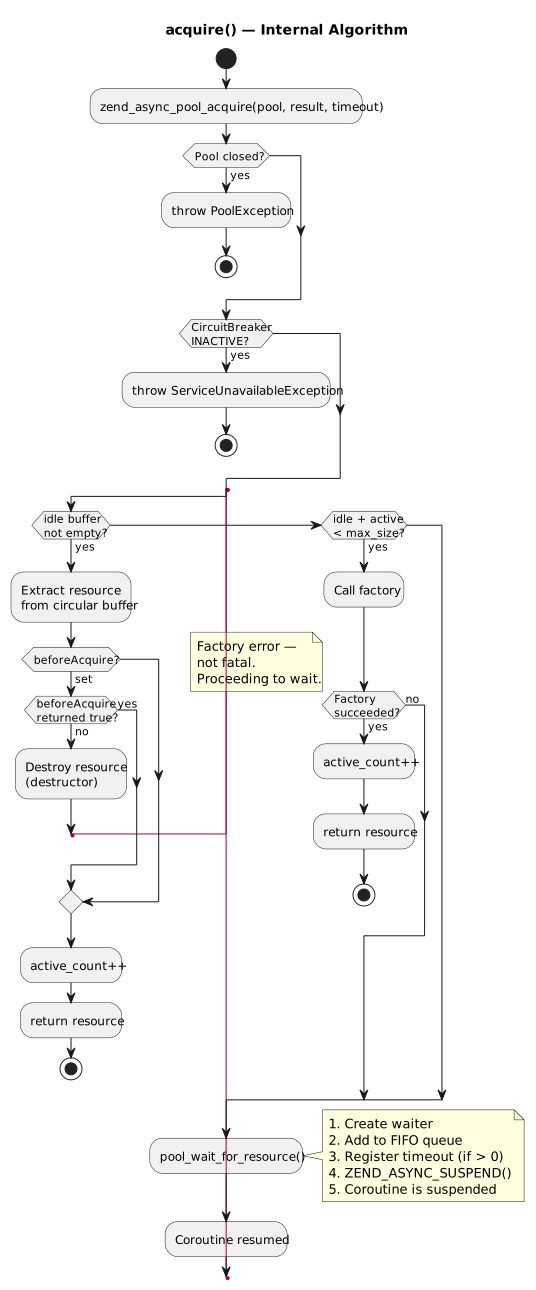
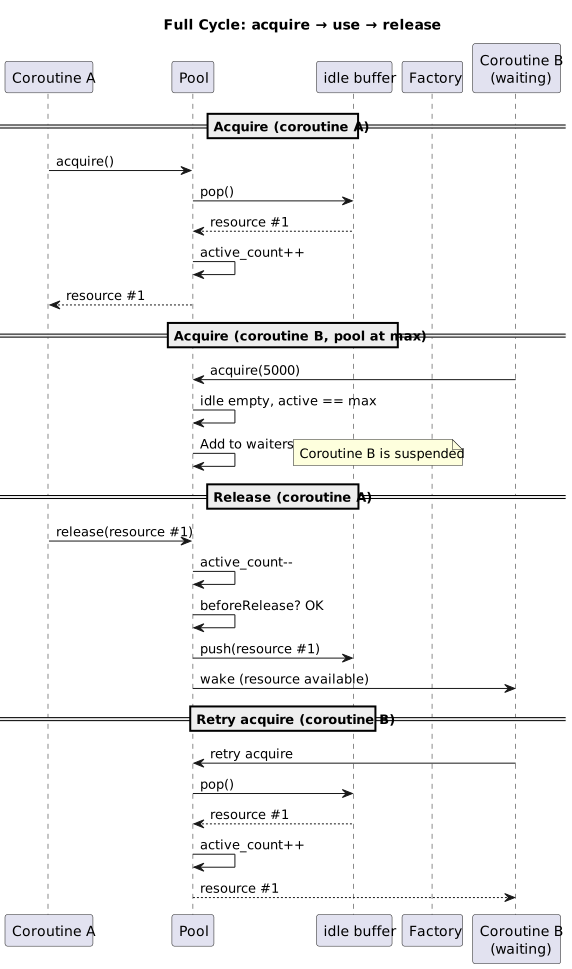
When all resources are busy and max_size is reached, the coroutine suspends via ZEND_ASYNC_SUSPEND(). The waiting mechanism is similar to channels:
- A
zend_async_pool_waiter_tstructure is created - The waiter is added to the FIFO
waitersqueue - A callback for wake-up is registered
- If a timeout is set -- a timer is registered
ZEND_ASYNC_SUSPEND()-- the coroutine yields control
Wake-up occurs when another coroutine calls release().
Release: Returning a Resource
Healthcheck: Background Monitoring
If healthcheckInterval > 0, a periodic timer is started when the pool is created. The timer is integrated with the reactor via ZEND_ASYNC_NEW_TIMER_EVENT.
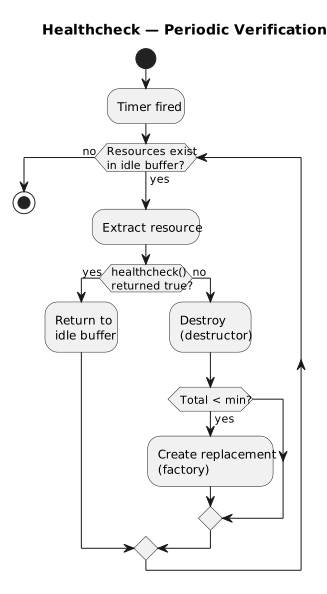
The healthcheck verifies only free resources. Busy resources are not affected. If, after removing dead resources, the total count drops below min, the pool creates replacements.
Circular Buffer
Free resources are stored in a circular buffer -- a ring buffer with fixed capacity. The initial capacity is 8 elements, expanded as needed.
push and pop operations run in O(1). The buffer uses two pointers (head and tail), enabling efficient addition and extraction of resources without moving elements.
Integration with the Event System
The pool inherits from zend_async_event_t and implements a full set of event handlers:
| Handler | Purpose |
|---|---|
add_callback | Register a callback (for waiters) |
del_callback | Remove a callback |
start | Start the event (NOP) |
stop | Stop the event (NOP) |
dispose | Full cleanup: free memory, destroy callbacks |
This enables:
- Suspending and resuming coroutines via event callbacks
- Integrating the healthcheck timer with the reactor
- Properly releasing resources through event disposal
Garbage Collection
The PHP pool wrapper (async_pool_obj_t) implements a custom get_gc that registers all resources from the idle buffer as GC roots. This prevents premature garbage collection of free resources that have no explicit references from PHP code.
Circuit Breaker
The pool implements the CircuitBreaker interface with three states:
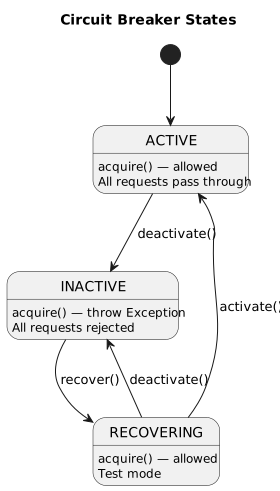
Transitions can be manual or automatic via CircuitBreakerStrategy:
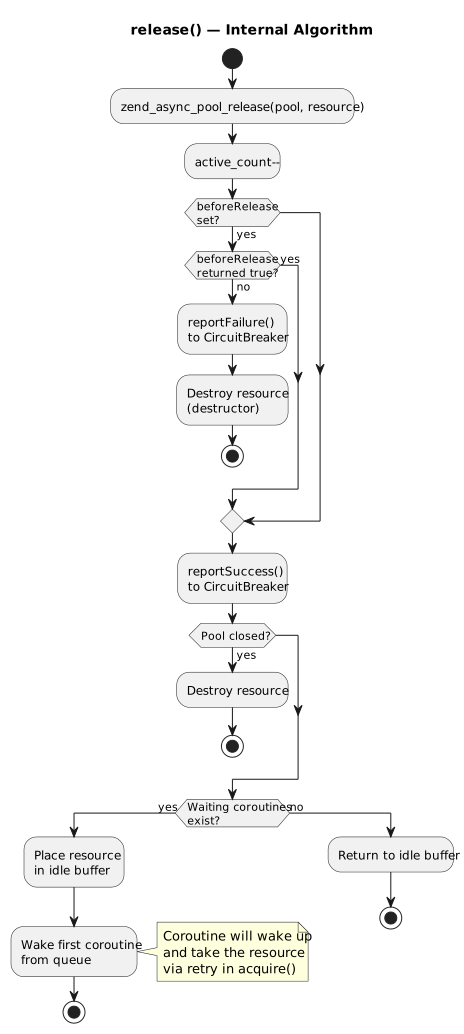
reportSuccess()is called on a successfulrelease(resource passedbeforeRelease)reportFailure()is called whenbeforeReleasereturnedfalse- The strategy decides when to switch states
Close: Shutting Down the Pool
When the pool is closed:
- The pool event is marked as CLOSED
- The healthcheck timer is stopped
- All waiting coroutines are woken up with a
PoolException - All free resources are destroyed via
destructor - Busy resources continue to live -- they will be destroyed upon
release
C API for Extensions
Extensions (PDO, Redis, etc.) use the pool through macros:
| Macro | Function |
|---|---|
ZEND_ASYNC_NEW_POOL(...) | Create pool with C callbacks |
ZEND_ASYNC_NEW_POOL_OBJ(pool) | Create PHP wrapper for pool |
ZEND_ASYNC_POOL_ACQUIRE(pool, result, timeout) | Acquire a resource |
ZEND_ASYNC_POOL_RELEASE(pool, resource) | Release a resource |
ZEND_ASYNC_POOL_CLOSE(pool) | Close the pool |
All macros call function pointers registered by the async extension at load time. This ensures isolation: the PHP core does not depend on the specific pool implementation.
Sequence: Full Acquire-Release Cycle
What's Next?
- Async\Pool: Guide -- how to use the pool
- PDO Pool Architecture -- PDO-specific layer
- Coroutines -- how coroutines work