PDO Pool Architecture
This article describes the internal design of PDO Pool. If you are looking for a usage guide, see PDO Pool: Connection Pool.
Two-Level Architecture
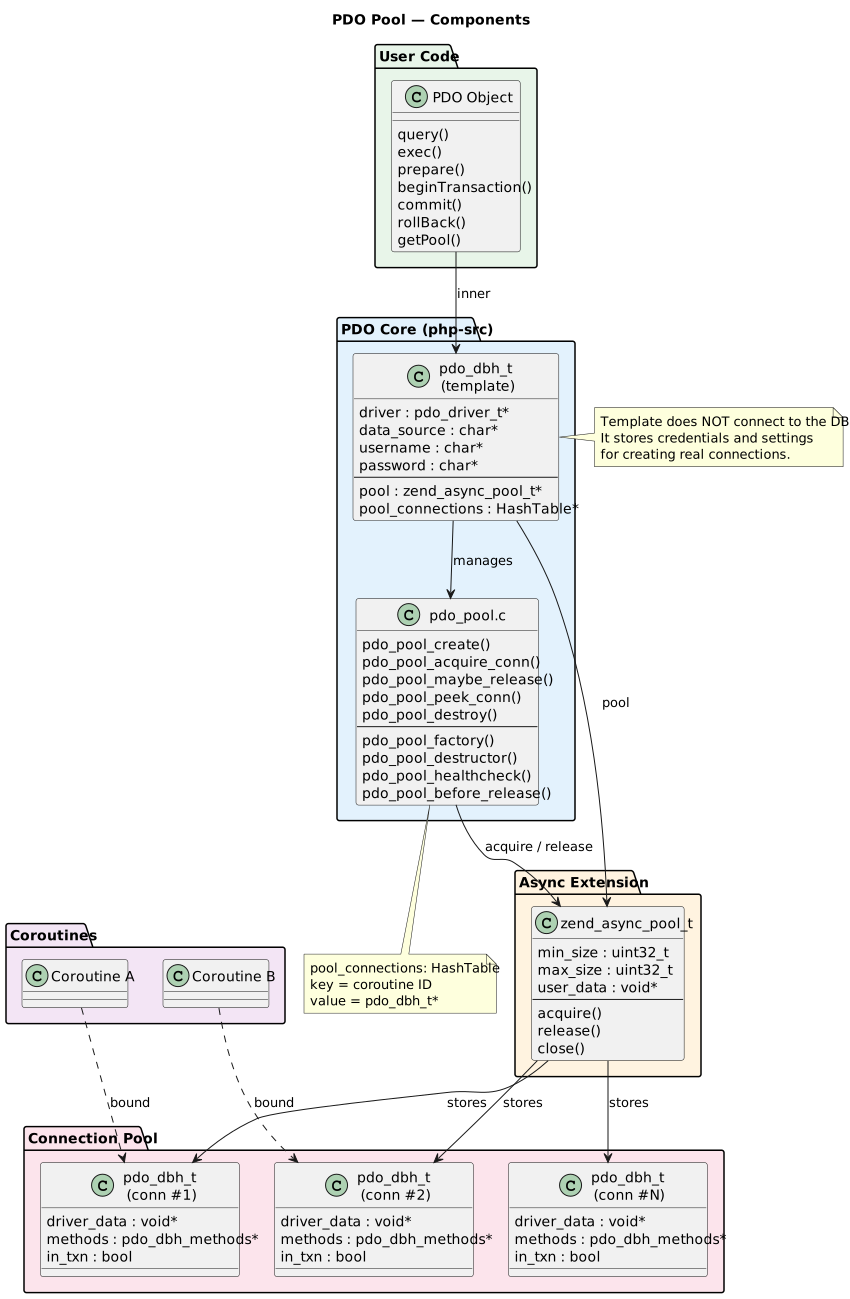
PDO Pool consists of two layers:
1. PDO Core (pdo_pool.c) -- logic for binding connections to coroutines, transaction management, statement reference counting.
2. Async Pool (zend_async_pool_t) -- the universal resource pool from the async extension. Manages the queue of free connections, limits, and healthchecks. It knows nothing about PDO -- it works with abstract zval values.
This separation allows using the same pooling mechanism for any resources, not just databases.
Component Diagram
Template Connection
When creating a PDO with a pool, the core does not open a real TCP connection. Instead, a template is created -- a pdo_dbh_t object that stores the DSN, username, password, and a reference to the driver. All real connections are created later, on demand, based on this template.
For the template, db_handle_init_methods() is called instead of db_handle_factory(). This method sets the driver's method table (dbh->methods) but does not create a TCP connection or allocate driver_data.
Connection Lifecycle
Creating a Connection from the Pool (Sequence)
Internal API
pdo_pool.c -- Public Functions
| Function | Purpose |
|---|---|
pdo_pool_create() | Creates a pool for pdo_dbh_t based on constructor attributes |
pdo_pool_destroy() | Releases all connections, closes the pool, clears the hash table |
pdo_pool_acquire_conn() | Returns a connection for the current coroutine (reuse or acquire) |
pdo_pool_peek_conn() | Returns the bound connection without acquire (NULL if none) |
pdo_pool_maybe_release() | Returns the connection to the pool if no transaction or statements |
pdo_pool_get_wrapper() | Returns the Async\Pool PHP object for the getPool() method |
pdo_pool.c -- Internal Callbacks
| Callback | When Called |
|---|---|
pdo_pool_factory() | Pool needs a new connection (acquire when pool is empty) |
pdo_pool_destructor() | Pool destroys a connection (on close or eviction) |
pdo_pool_healthcheck() | Periodic check -- is the connection still alive? |
pdo_pool_before_release() | Before returning to pool -- rollback uncommitted transactions |
pdo_pool_free_conn() | Closes the driver connection, frees memory |
Binding to a Coroutine
Connections are bound to coroutines via a pool_connections hash table, where the key is the coroutine identifier and the value is a pointer to pdo_dbh_t.
The coroutine identifier is computed by the pdo_pool_coro_key() function:
- If the coroutine is a PHP object --
zend_object.handle(sequential uint32_t) is used - For internal coroutines -- the pointer address shifted by
ZEND_MM_ALIGNMENT_LOG2
Cleanup on Coroutine Completion
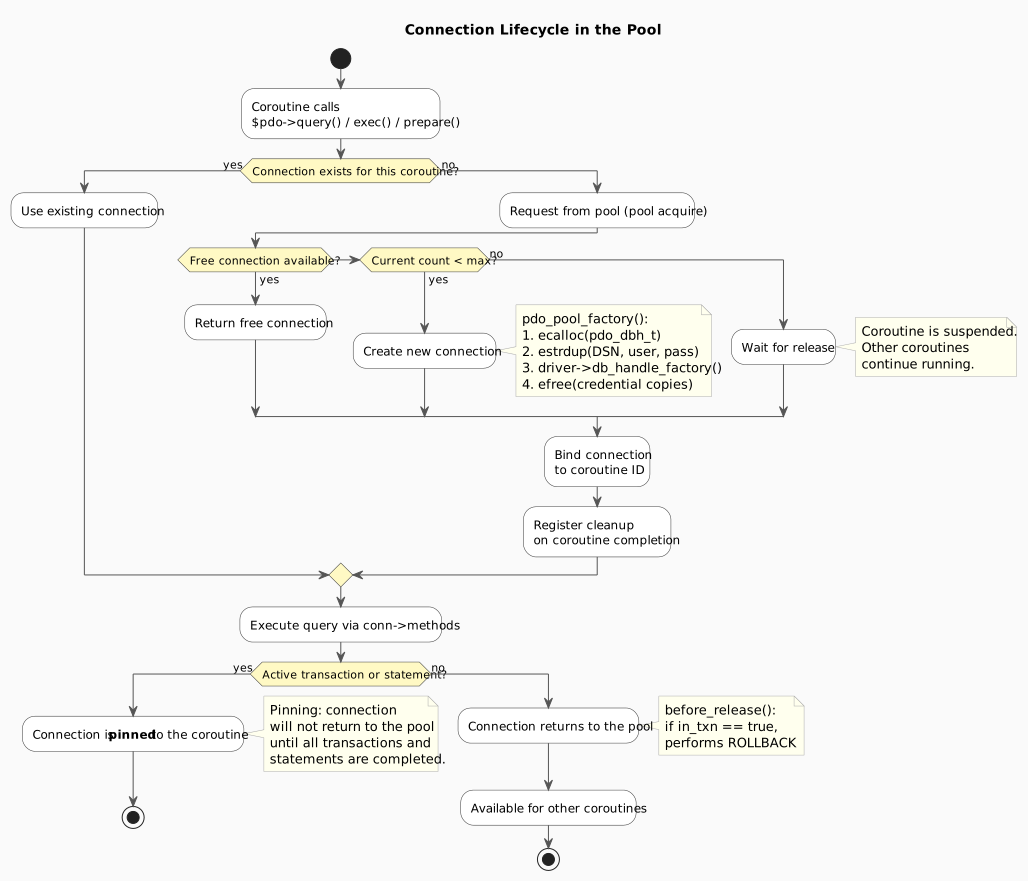
When a connection is bound to a coroutine, a pdo_pool_cleanup_callback is registered via coro->event.add_callback(). When the coroutine completes (normally or with an error), the callback automatically returns the connection to the pool. This guarantees no connection leaks even with unhandled exceptions.
Pinning: Connection Locking
A connection is pinned to a coroutine and will not return to the pool if at least one condition is met:
conn->in_txn == true-- an active transactionconn->pool_slot_refcount > 0-- there are live statements (PDOStatement) using this connection
The refcount is incremented when a statement is created and decremented when it is destroyed. When both conditions are cleared, pdo_pool_maybe_release() returns the connection to the pool.
Credentials Management in the Factory
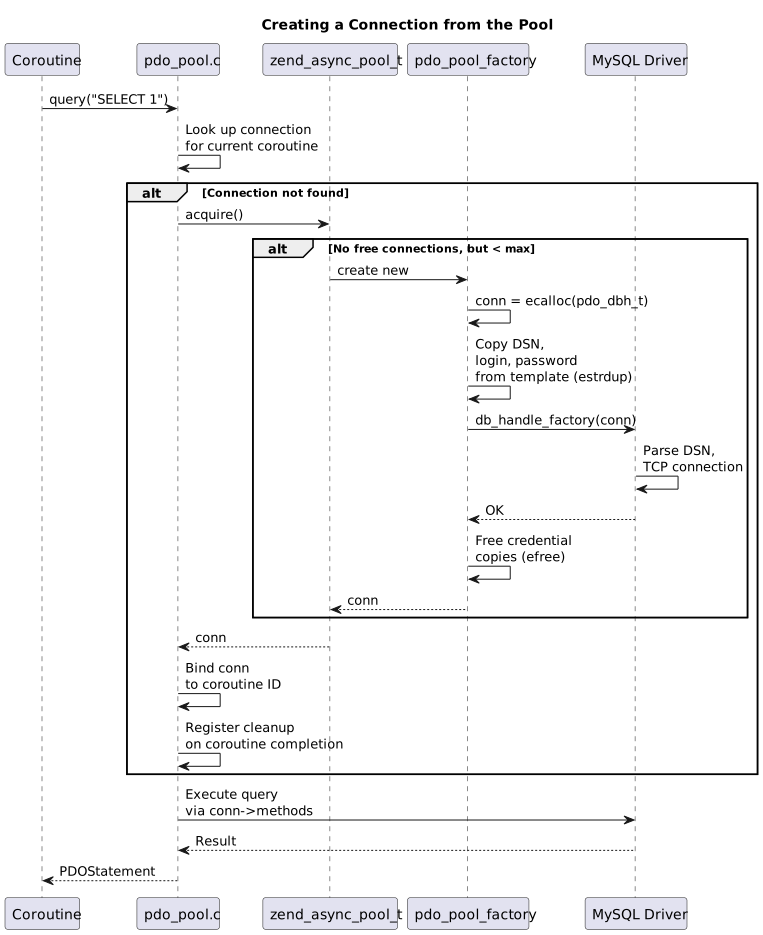
When creating a new connection, pdo_pool_factory() copies the DSN, username, and password strings from the template via estrdup(). This is necessary because drivers may mutate these fields during db_handle_factory():
- PostgreSQL -- replaces
;with spaces indata_source - MySQL -- allocates
username/passwordfrom DSN if they were not passed - ODBC -- completely rebuilds
data_source, embedding credentials
After a successful db_handle_factory() call, the copies are freed via efree(). On error, freeing happens through pdo_pool_free_conn(), which is also used by the pool's destructor.
Incompatibility with Persistent Connections
Persistent connections (PDO::ATTR_PERSISTENT) are incompatible with the pool. A persistent connection is bound to the process and survives across requests, while the pool creates connections at the request level with automatic lifecycle management. Attempting to enable both attributes simultaneously will result in an error.
What's Next?
- PDO Pool: Connection Pool -- usage guide
- Coroutines -- how coroutines work
- Scope -- managing coroutine groups